2026 Best Laser Hair Removal for Blonde or Gray Hair?

Time:2026-09-21 Author:Liam
0%

For anyone asking, “does laser hair removal work on blonde or gray hair,” the honest answer is usually limited. Laser devices target melanin, the pigment inside each hair. Blonde hair contains less melanin. Gray hair contains little or none. That makes the laser’s target faint or absent. The result can resemble a camera struggling in dim light.

Dermatologist and laser specialist Dr. Tina Alster has explained, “The laser needs a target.” This simple point matters. Darker blonde strands may respond unevenly, especially when their roots contain some pigment. White, silver, and fully gray hairs usually respond poorly to traditional laser treatments. Skin tone, hair thickness, treatment settings, and the device itself also influence results. One person may notice thinner growth. Another may notice almost nothing.

This 2026 guide examines real treatment possibilities, not attractive promises. It compares diode, alexandrite, and Nd:YAG technologies. It also explains why changing settings cannot create pigment that hair does not have. Some clinics may recommend a test patch. That is sensible. A small patch can reveal how your hair reacts before a full treatment plan begins.

Electrolysis may offer a more suitable option for pigment-free hairs. It treats individual follicles instead of relying on hair color. Still, it requires patience, repeated appointments, and a qualified professional. Results vary. Marketing language can sound more certain than biology allows. This guide keeps that limitation visible while reviewing expert guidance, practical experiences, safety considerations, and realistic expectations for blonde or gray hair.
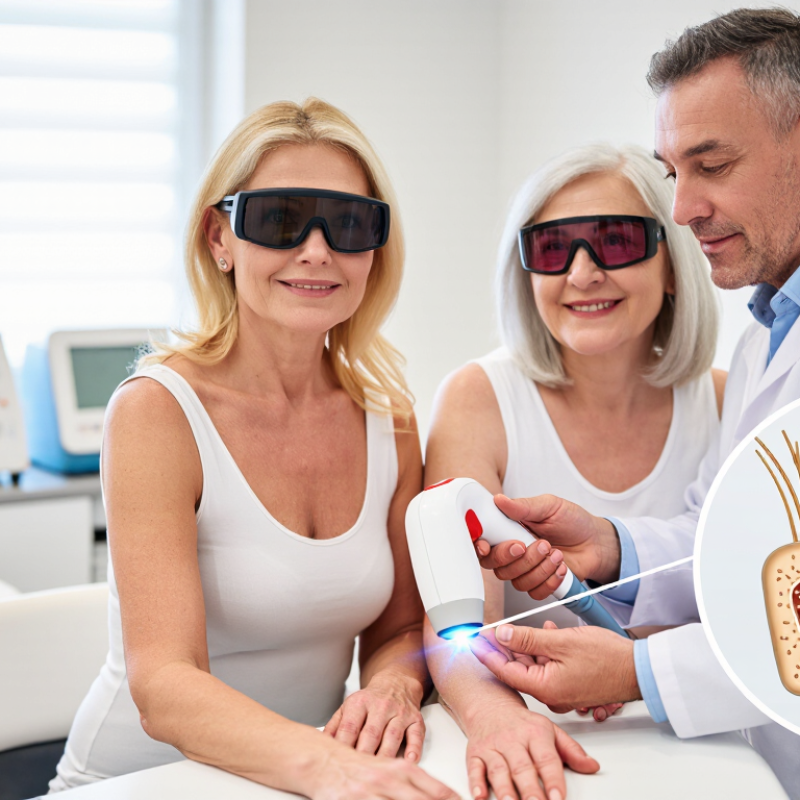
2026 Best Laser Hair Removal for Blonde or Gray Hair?

Why Blonde and Gray Hair Respond Differently to Laser Treatment

2026 Best Laser Hair Removal for Blonde or Gray Hair?

Why Blonde and Gray Hair Respond Differently to Laser Treatment

Laser hair removal depends on melanin, the pigment that absorbs light and heats the follicle. Blonde hair contains less melanin than brown or black hair. Gray and white hair contain very little or none. That difference explains many disappointing results.

Darker blonde strands may respond slowly, especially when the hair is coarse. Very pale blonde hair often absorbs too little energy for reliable treatment. Gray hair presents a harder problem. Its follicle may still grow normally, but the visible strand lacks enough pigment for the laser to target. Higher settings are not automatically better. They can increase discomfort or irritate the skin without improving removal.

A qualified practitioner should assess hair color, thickness, skin tone, and follicle growth cycles. A small test area is useful, but it is not a guarantee. One patch may contain unusually dark hairs. Results can also vary across the same body area. That uncertainty matters.

Electrolysis may be worth discussing when hair is gray, white, or extremely light, because it targets individual follicles rather than hair pigment. It is slower and requires careful technique. Choose a licensed professional who explains limitations, records settings, and checks your skin before treatment. Do not shave away the evidence before consultation. A clear photograph and an honest hair history can improve the assessment.

How Laser Hair Removal Technologies Target Light or Gray Hair

Laser hair removal targets melanin, the pigment inside each hair. Dark hair absorbs light efficiently and converts it into heat around the follicle. Blonde, white, and gray hair contain little or no melanin, so conventional laser systems may deliver weak results. A 2023 ISAPS Global Survey listed hair removal among the most performed non-surgical aesthetic procedures worldwide, with more than one million treatments reported. Popularity does not guarantee suitability.

Some systems use different wavelengths, pulse durations, or cooling methods to improve comfort and targeting. However, changing the wavelength cannot create pigment that the hair does not have. Light-blonde hair may respond modestly when darker pigment remains near the root. Gray or white hair usually responds poorly. A 2022 review in Lasers in Medical Science also emphasized that hair color, thickness, skin tone, and treatment settings strongly influence outcomes. Results are not perfectly predictable. That matters.

Tips: Request a qualified skin assessment and a small test area. Ask whether your hair has enough pigment for laser treatment. Avoid judging success after one session; growth cycles require several appointments. Take clear photos under identical lighting. If gray hair shows no meaningful response, discuss another clinically regulated option with a licensed professional. The honest answer may be that laser is not your best tool.

Which Treatment Options Work Best for Blonde or Gray Hair in 2026

For blonde or gray hair in 2026, treatment choice depends on pigment, thickness, and skin tone. Laser devices target melanin, the pigment inside the hair shaft. Blonde, white, and gray hairs contain too little melanin for reliable heating. The American Academy of Dermatology Association states that laser hair removal works best on dark hair and may respond poorly to light-colored hair. Gray hair is especially difficult.

Electrolysis remains the most dependable option for pale hair. The U.S. Food and Drug Administration recognizes electrolysis as permanent hair removal when follicles are treated successfully. A trained electrologist inserts a fine probe into each follicle, then applies controlled electrical energy. It treats one hair at a time. That takes patience. Large areas may require many appointments. Results also depend heavily on technique, hair-growth cycles, and consistent aftercare.

Laser can still help when blonde hair has darker roots or mixed pigmentation. A licensed clinician should inspect regrowth before recommending treatment. Patch testing matters, especially for deeper skin tones or sensitive skin. Avoid choosing a device from advertising claims alone. Current dermatology guidance warns that IPL and laser systems are not equally effective for every hair color. Sometimes, a small test area gives a more honest answer than a sales consultation. My practical concern is often overlooked: some “blonde” hair looks darker under examination, while truly white strands usually need electrolysis.

How to Choose a Safe and Effective Clinic and Treatment Plan

For blonde or gray hair, laser hair removal requires careful screening. These hairs contain little melanin, so many laser systems cannot identify them reliably. A trustworthy clinic should explain this limitation before taking payment. Ask whether your hair color, skin tone, and hair thickness are suitable for treatment. Gray, white, and very pale blonde hairs may respond poorly or not at all.

Choose a licensed medical professional with documented experience treating light hair. The consultation should include your medical history, medications, recent tanning, and previous hair-removal methods. Insist on protective eyewear and a patch test. The test area may reveal irritation, uneven response, or weak results. Avoid clinics that promise permanent removal after one session. That promise sounds attractive, but it is rarely realistic.

A safe plan should state the device type, treatment interval, expected number of sessions, and follow-up process. Ask how the clinic will adjust settings for sensitive skin or changing hair growth. Do not wax or pluck treated hairs between sessions, because the follicle must remain available for assessment. Shaving is usually discussed instead. For gray or white hairs, ask whether electrolysis or another clinically appropriate option may work better. I would also request written aftercare instructions, including signs of burns, swelling, or infection. If the explanation feels rushed, pause before booking.

What Results, Risks, Costs, and Maintenance Should You Expect

Laser hair removal in 2026 remains challenging for blonde, white, and gray hair. Most laser systems depend on melanin, the pigment that absorbs light energy. Light or absent pigment gives the laser little to target. Results may be patchy, slow, or minimal. Facial hair can respond differently from leg hair. Results vary.

A qualified clinician should assess hair color, skin tone, thickness, and medical history before treatment. A small test area can reveal irritation or poor response. Possible risks include redness, swelling, burns, scarring, and temporary light or dark patches. Darker skin needs careful settings and professional supervision. Rarely, hair may become thicker around treated areas. I would not trust promises of permanent removal for gray hair.

Costs often range from about $100 to $500 per session, depending on location and treatment area. Several sessions may be needed, usually spaced weeks apart. Blonde hair may need more appointments, with no guaranteed payoff. Gray or white hair often responds poorly, so electrolysis may deserve discussion. It treats individual follicles rather than relying on pigment. Maintenance can include occasional touch-ups, shaving between visits, and sunscreen after treatment. Follow-up matters. Even experienced providers can misjudge stubborn hair.

2026 Best Laser Hair Removal for Blonde or Gray Hair? - What Results, Risks, Costs, and Maintenance Should You Expect

Method How It Works Suitability for Blonde Hair Suitability for Gray or White Hair Typical Results Typical Sessions Typical U.S. Cost Main Risks and Limitations Maintenance
Alexandrite, diode, or similar pigment-targeting laser Uses concentrated light absorbed mainly by melanin in the hair shaft and follicle. Limited
May help only when the hair contains enough dark or medium pigment. Very light blonde hair usually responds poorly.
Poor
Gray and white hair generally contain too little melanin for reliable laser absorption.
Possible reduction in darker blonde hairs, but results are often incomplete, variable, and less predictable than with dark brown or black hair. Usually 6–10 sessions when the hair is an appropriate color; light hair may require additional sessions or may not respond. Approximately $150–$500 per session, depending on body area, location, and provider. Temporary redness, swelling, discomfort, pigment changes, burns, blistering, and rare scarring. Treatment should be performed by a qualified professional. Occasional touch-up sessions may be needed. Shaving is generally preferred between sessions; waxing or plucking can reduce treatment effectiveness.
Nd:YAG laser Uses a longer wavelength that penetrates more deeply and is commonly selected for darker skin types. Poor
Hair must still contain sufficient pigment; the longer wavelength does not solve the low-melanin problem of blonde hair.
Poor
Usually ineffective for gray or white hair because the follicle lacks the pigment needed to absorb the light.
May reduce suitably pigmented hair, but should not be expected to permanently remove unpigmented blonde, gray, or white hair. Commonly 6–10 sessions for responsive hair, with results depending on hair color, thickness, growth cycle, and skin type. Approximately $200–$600 per session, with higher prices for larger treatment areas. Temporary redness and swelling are common. Incorrect settings can cause burns or temporary or permanent pigment changes. Periodic maintenance may be required because some follicles can remain active or later produce visible hair.
Intense Pulsed Light (IPL) Uses a broad spectrum of light rather than a single laser wavelength and relies on melanin absorption. Limited to poor
May have some effect on darker blonde or light-brown hair, but very light blonde hair usually responds poorly.
Poor
Gray or white hair generally lacks enough pigment for meaningful reduction.
Variable reduction; home devices usually provide slower and less consistent results than professional treatment. Professional treatment may involve 6–10 or more sessions. Home devices require repeated use according to their instructions. Approximately $100–$400 per professional session. Home devices commonly cost about $200–$600 as a one-time purchase. Redness, irritation, burns, blistering, and pigment changes are possible. Not all devices are suitable for every skin tone. Regular repeat treatments are usually necessary because IPL reduces growth rather than guaranteeing permanent removal.
Electrolysis Inserts a fine probe into each follicle and applies electrical energy to disable the growth center. Best established option
Works on blonde hair because it does not depend on hair pigment.
Best established option
Can treat gray, white, and very light hair when the follicle can be accurately reached.
Offers permanent hair removal when each treated follicle is successfully destroyed, although multiple appointments are needed to catch hairs in active growth. Often requires many appointments over several months or longer. Small areas may take 15–30 minutes; larger areas require substantially more time. Approximately $50–$150 per hour, or about $25–$75 for a shorter appointment, depending on region and provider. Temporary redness, tenderness, scabbing, ingrown hairs, or infection are possible. Inexperienced treatment can increase the risk of scarring or skin discoloration. Follow-up continues until all relevant follicles have been treated. Occasional re-treatment may be needed if a follicle was missed or incompletely treated.
Temporary removal: shaving or trimming Cuts the hair at or near the skin surface without changing the follicle. Effective for appearance
Works regardless of hair color.
Effective for appearance
Works regardless of hair color.
Immediate visible reduction, but hair regrowth is expected within days. As needed, often every 1–7 days depending on the body area and personal preference. Approximately $5–$30 for basic supplies, with ongoing replacement costs. Nicks, razor burn, irritation, folliculitis, and ingrown hairs may occur. It does not permanently reduce growth. Frequent repetition is required. Use clean equipment, shaving gel, and gentle pressure to reduce irritation.
Temporary removal: waxing or sugaring Removes hair from the root but does not permanently disable the follicle. Effective for appearance
Works regardless of hair color.
Effective for appearance
Works regardless of hair color.
Smooth skin commonly lasts about 2–6 weeks, depending on the individual growth cycle. Usually every 3–6 weeks. Approximately $30–$100 per appointment, depending on the body area and location. Pain, redness, irritation, ingrown hairs, folliculitis, bruising, and skin lifting can occur. Avoid waxing over recently sunburned or highly irritated skin. Allow sufficient regrowth for the next appointment. Avoid picking at the skin and follow aftercare instructions.

Cost and outcome note: Prices are broad 2026 U.S. estimates, not quotes from any specific company. Actual outcomes depend on hair pigment and thickness, skin tone, treatment area, hormones, medications, provider skill, and the hair-growth cycle. A consultation and patch test are advisable before light-based treatment.

FAQS

Why does laser hair removal work better on dark hair?

Dark hair contains more melanin, which absorbs light and heats the follicle. That pigment gives the laser a clearer target. Results still vary.

Can laser treatment remove blonde hair?

Dark-blonde hair may respond slowly, especially when strands are coarse. Very pale blonde hair often absorbs too little energy. Several appointments may produce limited improvement. The outcome is uncertain.

Why does gray or white hair respond poorly?

Gray and white strands contain very little or no melanin. The follicle may grow normally, but the visible hair gives the laser little to target. Higher settings may increase irritation without improving removal.

Can a test patch predict the final result?

A small test area can reveal skin irritation and possible response. However, one patch may contain unusually dark hairs. It cannot guarantee results across an entire leg or face. That limitation matters.

What should a practitioner check before treatment?

They should assess hair color, thickness, skin tone, growth cycles, and medical history. Ask whether your hair has enough pigment for laser treatment. Bring clear photographs under consistent lighting. Do not shave first.

What risks should people understand?

Possible effects include redness, swelling, burns, scarring, and temporary skin-color changes. Darker skin requires careful settings and professional supervision. Rarely, nearby hair may appear thicker. Promises deserve skepticism.

How many sessions might be needed?

Several sessions are usually spaced weeks apart because hair grows in cycles. Blonde hair may require more appointments, without a guaranteed payoff. Gray and white hair often respond poorly. One session proves little.

Is another method worth discussing for gray hair?

Electrolysis may be worth discussing because it targets individual follicles rather than hair pigment. It is slower and requires careful technique. Choose a licensed professional who explains limitations and records settings. Laser may not be your best tool.

Conclusion

Blonde and gray hair can be more difficult to treat with conventional laser hair removal because these hairs contain less melanin, the pigment that absorbs laser energy. This raises the important question: does laser hair removal work on blonde or gray hair? The answer depends on the hair’s exact color, thickness, and remaining pigment. Some light blonde, red, or partially gray hairs may respond to carefully selected light-based settings, while white or fully depigmented hair often shows limited results.

In 2026, people with light or gray hair may consider alternative approaches, such as treatments designed to target the follicle through non-pigment-based energy, or professional electrolysis when appropriate. A qualified clinic should assess your skin and hair, explain realistic expectations, perform a safety test, and create a personalized treatment schedule. Results may require multiple sessions, with costs varying by treatment area and location. Possible risks include temporary redness, irritation, pigment changes, or discomfort, so proper aftercare and occasional maintenance are important.

Liam

Liam

Liam is a dedicated marketing professional with a profound expertise in the industry, where he excels at highlighting the unique advantages of our core products. With a keen understanding of market trends and consumer needs, Liam frequently updates our company’s professional blog, providing......