A hair dryer that suddenly blows cold air may have a simple fault, not a ruined motor. The heating element could be damaged, clogged with lint, or disconnected internally. A stuck cool-shot button can also interrupt heat while the fan continues working. That familiar stream of air can hide a serious electrical problem.
This guide explains how to fix a hair dryer that only blows cold air through practical, low-risk checks. The U.S. Consumer Product Safety Commission warns users to unplug hair dryers when they are not in use and keep them away from water. UL Solutions also stresses that built-in safety protection does not replace careful operation. John Drengenberg, a consumer-safety expert formerly associated with UL, puts the principle plainly: “Safety devices are not a substitute for safe use.” Never open a powered appliance. Unplug it first, allow it to cool, and inspect the filter, switch, cord, and casing for visible damage.
Start with the air inlet. A gray layer of lint can restrict airflow and trigger overheating protection. Clean it gently with a dry brush. Then test the cool-shot button without forcing it. If the dryer still produces cold air, the heating coil, thermostat, thermal fuse, or control board may need professional testing. Do not bypass a fuse or wrap damaged wiring with tape. That shortcut can create heat behind the plastic housing.
Some diagnoses will be wrong at first. That is normal. A careful inspection matters more than a quick repair. If burning smells, crackling sounds, melted plastic, or repeated shutdowns appear, replace the appliance or consult a qualified technician. Repair costs can exceed the value of an older dryer.
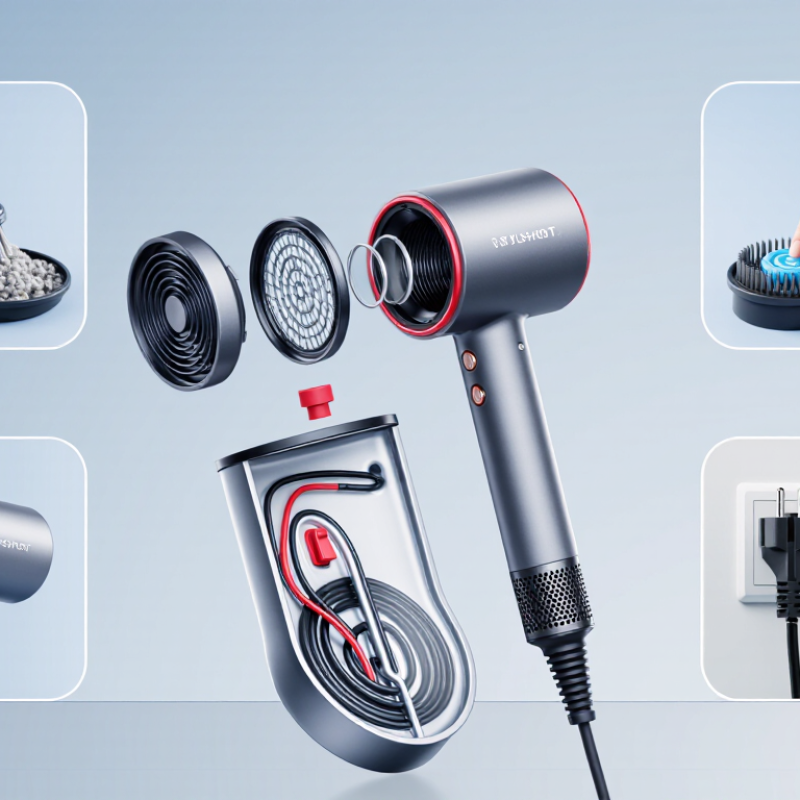
Identify Why the Hair Dryer Is Blowing Only Cold Air
A hair dryer that suddenly blows cold air usually has a disabled heating circuit, not a failed fan. Start unplugged. Check the rear filter and inlet screen for lint, hair, or dust. Restricted airflow can trigger the thermal protector and shut down the heater. If airflow feels weak, blockage is the leading suspect.
Let the appliance cool for 20 to 30 minutes, then test it briefly. If the fan runs but the air remains cold, inspect the heat setting, power cord, plug, and visible damage. A loose switch, open heating element, failed thermal fuse, or defective thermostat can also cause this symptom. IEC 60335-2-23 addresses safety requirements for household hair-care appliances, including protection against overheating. Do not bypass a fuse or continue testing after a burning smell appears.
Safety matters here.
The National Fire Protection Association reported about 1,200 home structure fires annually involving hair dryers and curling irons during its studied period. That evidence supports a careful diagnosis, especially near water. A multimeter can check continuity only after complete disconnection, but internal repairs require electrical expertise. Look closely. If the dryer trips a breaker, makes crackling sounds, or stays cold after cleaning, replacement may be safer than repair. I have seen users blame the heating coil too quickly; sometimes a blocked filter caused the entire problem. Still, airflow alone does not prove the heater is healthy.
Unplug the Dryer and Check Its Basic Components
How to Fix a Hair Dryer That Only Blows Cold Air?
Unplug the dryer before touching its parts. This simple action matters. The U.S. Consumer Product Safety Commission warns against using electrical appliances near water. A hair dryer can also draw significant power, often between 1,200 and 1,875 watts. Check the wall outlet with another safe appliance. Then inspect the plug, cord, and casing for scorch marks, cuts, or a loose connection.
Remove lint from the rear intake grille using a soft brush. Never push debris deeper inside. A blocked filter can restrict airflow and trigger the thermal cutout. Let the dryer cool for at least 20 minutes. Look for a reset button, if the model includes one. Press it only after unplugging the unit. Do not bypass a thermal fuse. That shortcut creates a fire risk. The National Fire Protection Association reported an estimated average of 2,900 home fires involving hair dryers and curling irons annually from 2011 to 2015.
If the fan runs but the air stays cold, the heating element, selector switch, or thermal fuse may have failed. Listen for unusual buzzing. Notice whether the airflow feels weak. These clues help separate an airflow fault from a heating fault. Opening the housing requires electrical testing and proper insulation checks. I would not recommend it without repair training. A mistaken connection can leave the dryer working briefly, then overheating. Sometimes, replacement is safer than repair.
How to Fix a Hair Dryer That Only Blows Cold Air?
Unplug the dryer and check its basic components with a multimeter.
After unplugging the hair dryer, set a multimeter to resistance or continuity mode. A thermal fuse and power switch should normally show near-zero resistance when continuous. The heating element and motor winding usually show a higher resistance value, but exact readings vary by model. An open-circuit reading or no continuity indicates a component that may need replacement.
Clean the Air Filter and Heating Vents
How to Fix a Hair Dryer That Only Blows Cold Air?
A hair dryer that blows cold air often has restricted airflow. Lint, dust, and hair can cover the intake filter or heating vents. The U.S. Consumer Product Safety Commission estimates that hair dryers are linked to about 2,200 residential fires each year. Poor airflow can make overheating more likely.
Unplug the dryer first. Let it cool completely. Remove the filter cover if the design allows it, then lift away visible lint with a soft, dry brush. A vacuum crevice tool can remove deeper dust without pushing debris inside. Clean the heating vents gently. Never rinse the dryer or insert metal objects. Water and damaged insulation create serious electrical risks.
Look closely.
Hold the filter toward a lamp. If light barely passes through, airflow remains restricted. I once cleaned only the outer grille and missed a compact felt-like layer behind it. The dryer stayed cold, so that shortcut wasted time. After cleaning, run the appliance briefly and check whether air moves strongly and evenly. Do not block the intake with bedding or clothing.
If the filter is clean but the dryer still produces cold air, the heating element, thermal fuse, or internal switch may have failed. Stop using it rather than opening the housing. Electrical Safety First advises replacing damaged appliances and keeping ventilation openings clear. A qualified repair professional can test internal parts safely, especially when there is a burnt smell, unusual noise, or repeated overheating.
How to Fix a Hair Dryer That Only Blows Cold Air? - Clean the Air Filter and Heating Vents
| Step |
What to Check |
Recommended Action |
Tools Needed |
Typical Time |
Expected Result |
| 1 |
Power and heat settings |
Turn the heat selector from the cool-shot or cold-air setting to a warm or hot setting. Make sure the cool-shot button is not stuck. |
None |
1 minute |
Warm air should begin after the heating element receives power. |
| 2 |
Air filter or rear intake |
Unplug the dryer. Remove loose lint and hair from the rear filter or intake grille using a soft, dry brush. Follow the user manual before removing any detachable filter. |
Soft brush or dry cloth |
3–5 minutes |
Improved airflow and reduced risk of overheating. |
| 3 |
Heating vents and outlet grille |
With the dryer unplugged and cool, remove visible lint or hair from the air outlet. Do not push debris deeper into the housing. |
Soft brush or wooden toothpick |
2–4 minutes |
More consistent airflow through the heating chamber. |
| 4 |
Cooling and drying |
If any washable filter part is approved by the manual, rinse it and allow it to dry completely before reinstalling. Never operate the dryer with a wet filter. |
Water and clean towel |
At least 30 minutes drying time |
A clean, fully dry intake area without moisture entering the motor. |
| 5 |
Reset or thermal protection |
Leave the unplugged dryer to cool for 10–15 minutes, then clear the intake and test it briefly. A blocked filter can trigger thermal protection. |
None |
10–15 minutes |
The heater may work again if overheating protection was activated. |
| 6 |
Test airflow and heat |
Reconnect the dryer to a dry outlet and test the lowest heat setting first. Keep the intake and outlet unobstructed during the test. |
None |
1–2 minutes |
Airflow should be steady and the outlet should become warm, not excessively hot. |
| 7 |
Persistent cold air, burning smell, sparks, or unusual noise |
Stop using the dryer, unplug it, and arrange inspection by a qualified appliance technician. Do not open the housing or bypass a fuse or thermal cutoff. |
None |
Immediate |
Reduced risk of electric shock, fire, or further damage. |
Safety note: Always unplug the hair dryer before cleaning. Keep water away from the motor, electrical connections, and power cord. If cleaning does not restore heat, the heating element, switch, wiring, or thermal fuse may require professional service.
Test the Heating Element, Thermostat, and Thermal Fuse
How to Fix a Hair Dryer That Only Blows Cold Air?
Unplug the hair dryer and let it cool completely. A cold airflow usually points to the heating circuit, not the fan. My first mistake was testing the element before checking the power cord and switch. Inspect the plug, cord, inlet screen, and internal wires for scorching or loose connections. Remove the rear cover only if the appliance design permits safe access.
Set a multimeter to resistance and test the heating element. A healthy element should show continuity, not an open circuit. For reference, a 1,500-watt element on 120 volts calculates near 9.6 ohms using R = V²/P. Actual readings vary. Test the thermostat at room temperature; it normally shows continuity until excessive heat opens it. Test the thermal fuse the same way. An open fuse may indicate overheating, restricted airflow, or a failing thermostat.
Never bypass it. The U.S. Consumer Product Safety Commission reported 15,970 hair-dryer-related fires from 1998 to 2010. NFPA’s Home Structure Fires report also links electrical failures to major residential fire losses.
Tips: Clean lint from the filter and heating chamber. Check continuity with power disconnected. Replace damaged parts with exact-rated equivalents. Do not restore power while the casing is open. If readings seem inconsistent, stop and use a qualified technician. My measurements are not perfect; meter settings and cold conditions can mislead. Rescue the appliance, but do not gamble with heat.
Replace Faulty Parts or Seek Professional Repair
How to Fix a Hair Dryer That Only Blows Cold Air?
When a hair dryer runs but produces cold air, the heater circuit may have failed. Unplug the appliance and let it cool completely. Check the rear filter for lint, because restricted airflow can trigger the thermal safety system. Clean it gently with a soft brush. If the dryer still blows cold air, the fault may involve the heating element, thermal fuse, internal switch, or wiring.
Replace Faulty Parts or Seek Professional Repair
Some parts can be replaced, but only with components having identical ratings. A damaged thermal fuse must never be bypassed. That shortcut can create a serious fire risk. Replacement also requires careful disassembly, secure connections, and proper insulation. A burnt smell, melted plastic, visible sparks, or a damaged cord means professional repair is safer. Sealed housings are especially difficult to inspect without electrical experience. A common mistake is blaming the heating element immediately. The fuse or switch may actually be the problem.
Tips: Always unplug before inspection. Photograph wire positions before removing anything. Use a continuity tester only if you understand safe testing procedures. If the repair feels uncertain, stop. Paying for qualified service may cost less than replacing damaged wiring or causing injury. Never test the dryer near water, even for a moment.
Conclusion
If you are wondering how to fix a hair dryer that only blows cold air, begin by identifying whether the issue is caused by a blocked airflow path, a damaged heating component, or an electrical safety feature that has activated. Unplug the dryer before inspecting it, then check the power cord, switches, air intake, and visible vents for dust, damage, or loose parts. Cleaning the air filter and heating vents may restore normal airflow and prevent overheating.
If the dryer still produces only cold air, the heating element, thermostat, and thermal fuse may need testing with suitable tools. These components control heat production and protect the appliance from excessive temperatures, so handle them carefully and never work on the dryer while it is connected to power. A faulty part may need to be replaced with a compatible component. If you are uncertain about electrical testing or repairs, seeking help from a qualified professional is the safest solution.
